
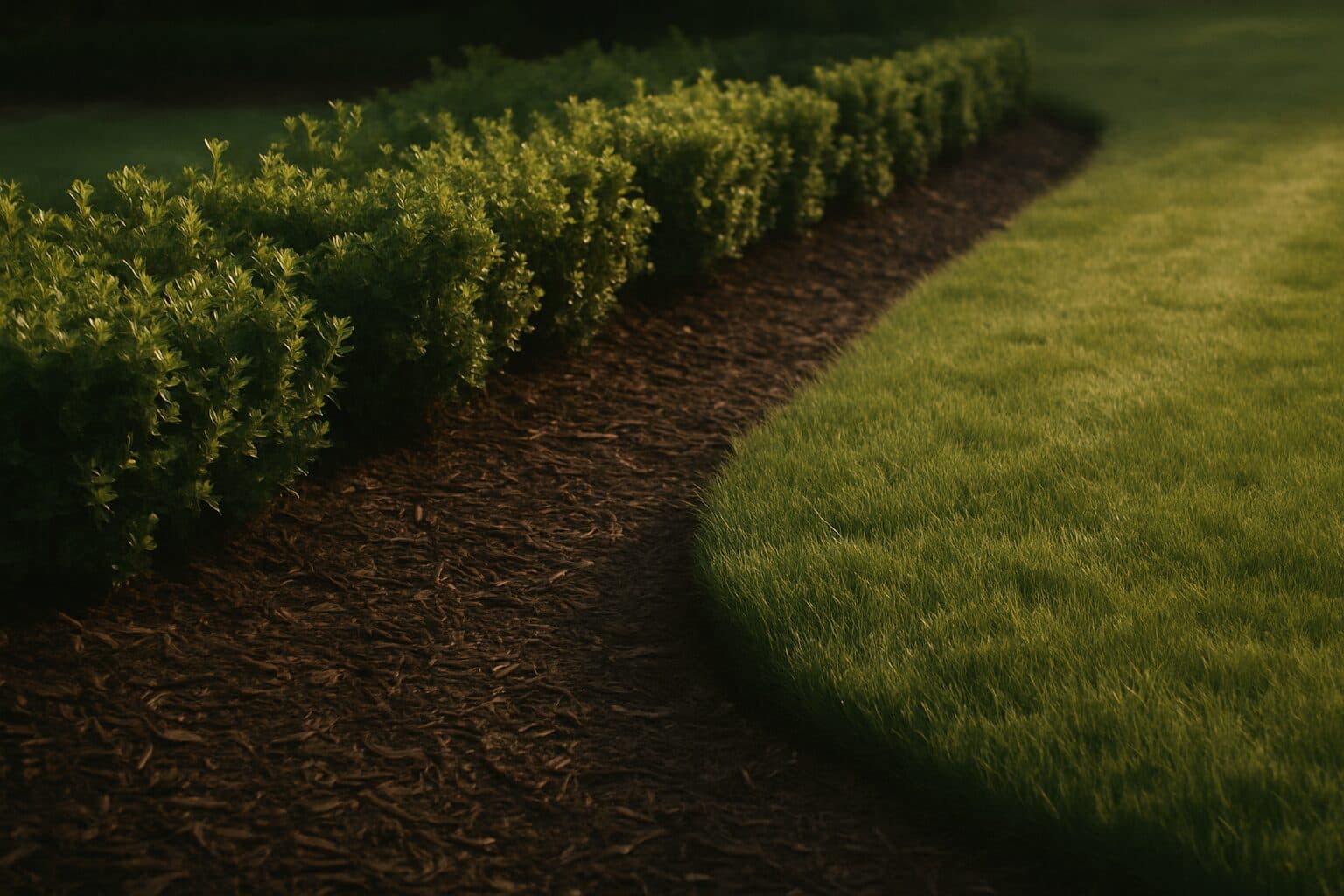
The right mulch matters more than most homeowners realize. Get it right and you get clean beds, better moisture retention, and fewer weeds for a full season. Get it wrong and you get beds that fade to an ugly gray in six weeks, soil compaction, and plants that underperform.
Here's the short list of what works on the North Shore of Massachusetts and what to skip.
The good options
1. Double-ground hardwood mulch (natural dark brown)
This is the default. It's what we install on most North Shore properties. Natural hardwood — usually a mix of oak, maple, and birch from local mills — breaks down over a season and feeds the soil as it does. It's affordable, holds its color reasonably well, and looks good against foundation plantings and most bed lines.
Best for: general-purpose beds, foundation plantings, tree rings, most residential yards.
2. Cedar mulch
Cedar is the premium option. It lasts longer than hardwood (often two seasons between full refreshes), smells better, and has natural insect-repellent properties. The downside is cost — cedar runs roughly 40% more per yard than hardwood. For a property-wide installation, that adds up.
Best for: front-of-house display beds, properties where smell matters, or beds where budget supports a premium finish.
3. Pine bark (chunky or fine)
Pine bark — especially the chunky mini-nugget style — is excellent for acid-loving plantings like rhododendrons, azaleas, hydrangeas, and blueberries. It breaks down slower than hardwood and the pine acidity feeds plants that want it.
Best for: acid-loving plantings, rock gardens, informal natural beds.
The ones to avoid
Dyed red or black mulch
Dyed mulch is usually ground-up construction debris — old pallets, framing lumber, demolition wood — colored with iron oxide (red) or carbon black. The color is artificial, the source material is suspect (often treated or painted wood), and it doesn't feed soil. It looks loud on a nice property and fades to pale pink or gray within a season.
Rubber mulch
Marketed as "permanent" and "kid-safe" for playgrounds. In planting beds, it's a disaster. It doesn't break down, leaches chemicals into the soil in hot weather, gets kicked around by landscaping tools, and is almost impossible to remove once it's blended into the bed. Never in beds. Period.
Fresh wood chips from a tree service
If a tree service drops free wood chips in your driveway, be cautious. Fresh uncomposted chips tie up nitrogen as they break down, starving plants in the beds they're spread over. Chips can be great for paths and rough areas, but not for active planting beds until they've composted for at least a season.
The depth matters as much as the type
Whatever mulch you install, install it at the right depth. 2 to 3 inches on top of existing mulch, or 3 inches fresh on bare soil. Anything more suffocates roots and causes more problems than it solves. Piling mulch up around tree trunks — "volcano mulching" — is especially damaging and remarkably common.
Timing
On the North Shore, mulch goes down in late April to mid-May. Too early and the soil hasn't warmed. Too late and summer weeds have already germinated under last year's mulch. Our approach to timing and installation lives on the mulching service page.
To get a quote for your property, call or text (781) 715-4254. Ben looks at the beds, counts the cubic yards, and gives you a flat number.