
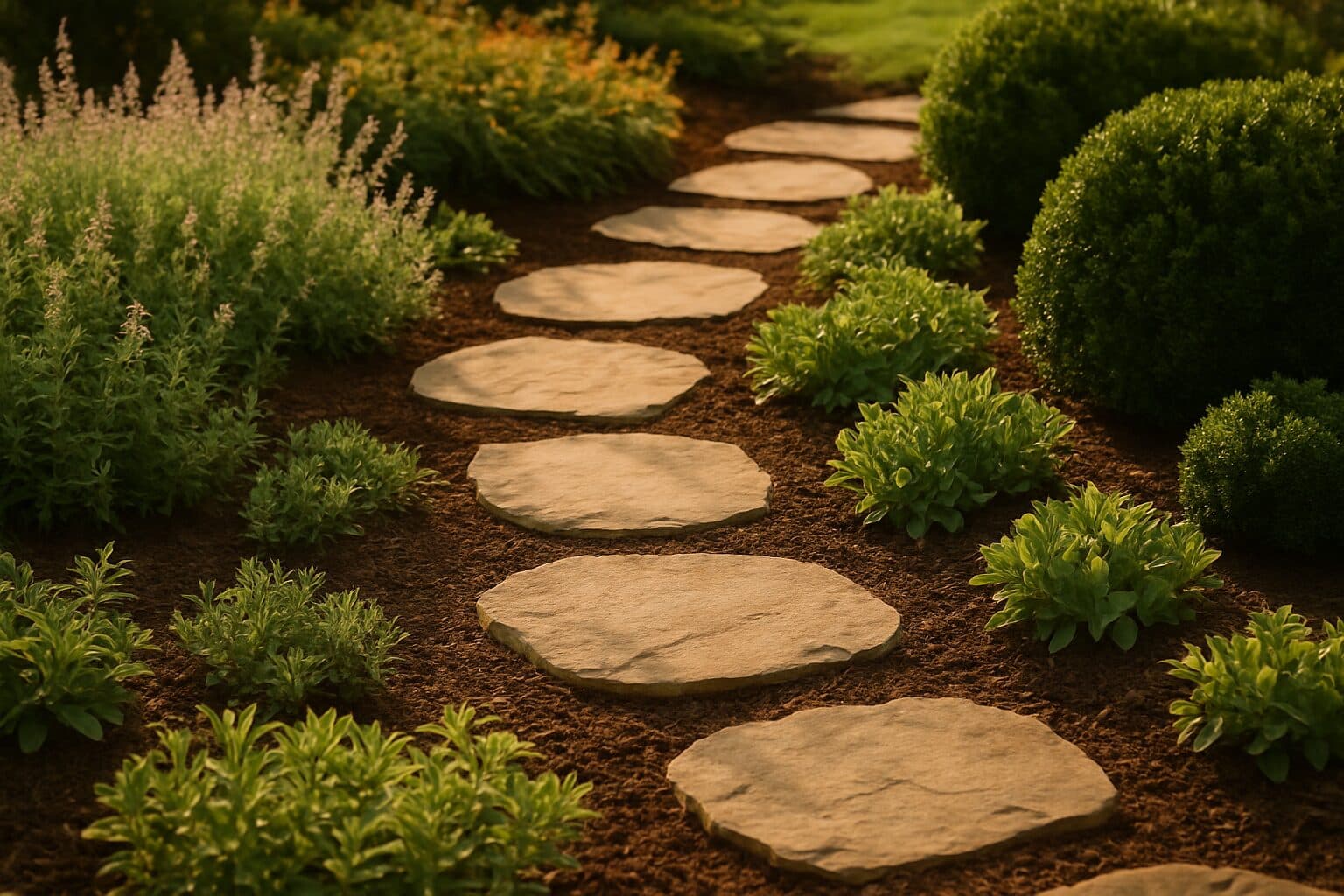
Softscape is everything alive: lawn, trees, shrubs, perennials, annuals, groundcover, mulch beds. Hardscape is everything that isn't: walkways, patios, retaining walls, driveways, stepping stones, edging, fire pits.
The distinction sounds academic until you're trying to decide where to spend money on your yard. Then it becomes very concrete — because hardscape and softscape solve different problems, cost very different amounts, and have very different lifespans.
What each is actually for
Softscape shapes how a yard feels
Softscape is what makes a yard a yard. Plant choices, bed lines, and lawn quality drive about 80% of how a property reads from the street. A property with great softscape and no hardscape can still feel complete.
Hardscape solves functional problems
Hardscape is usually the answer to a functional issue: the path from the driveway to the front door is a mud trail, the slope behind the house is eroding, there's nowhere to sit outside. You don't add hardscape for aesthetics alone — you add it because something in the yard doesn't work.
Cost differences
Rough orders of magnitude for a typical North Shore residential property:
- Softscape refresh (mulch, new foundation plantings, cleaned-up beds): usually $1,500–$5,000 for a one-shot project.
- Stepping-stone path: $1,000–$3,000 depending on stone choice and length.
- Paver walkway: $50–$100 per linear foot installed with proper base.
- Small retaining wall (under 3 ft): $60–$150 per square face foot.
- Engineered patio or tall wall: five-figure job, belongs with a dedicated hardscape specialist.
How to decide what your yard needs first
Three honest questions:
- What doesn't work? If there's a functional problem (muddy path, eroding slope, no usable outdoor space), hardscape probably goes first.
- What looks neglected? If the lawn is thin, the beds are weedy, and shrubs are overgrown, softscape goes first — hardscape on a poorly maintained yard looks worse than no hardscape at all.
- How long will you be in the house? Hardscape has a 20–30 year lifespan and a higher ROI on resale. Softscape needs ongoing maintenance but transforms how the property feels right now. Short timeline: softscape. Long timeline: mix.
What we handle (and what we don't)
Casey and Sons handles the scale of hardscape a true owner-operator can stand behind: stepping-stone paths, paver walkways up to about 60 linear feet, small retaining walls under 3 feet, and clean bed edging. Anything larger — engineered patios, tall structural walls, drainage reshaping — belongs with a dedicated hardscape specialist, and we'll refer you to one we trust.
For the softscape side — seasonal cleanups, mulch, hedge trimming, planting refreshes, full yard transformations — see the services page, or call or text (781) 715-4254.